Posts

Bring Us Some Figgy Pudding!

Image
It's been over a year since I last updated this blog. In late November last year, my Mum died of dementia, and I have struggled to maintain proper momentum ever since. However, her greatest gift to her children was a love of hospitality, so preparing food for the Christmas festivities seems the best place to pick up my writing and honour her memory. I've made my Christmas puddings today, which always brings back to me the importance of family, both natural and created. As children, we always had a home-made pudding at home. It was something my Grandma would make every year and bring with her on Christmas day. Mum was busy with young children and a large dinner (that's 'lunch' if you live in the south of England), and Grandma's pudding was a welcome help. With Grandma's death, though, the tradition of a home-made pudding came to an end, as Mum discovered the convenience of buying one ready-made from the supermarket. No shop-bought pudding ever tasted as good,...


Foodie 'membrances

Image
This weekend, my private dining society met to enjoy Mexican food. The date had been chosen for its proximity to el Dia de los Muertos, the Mexican celebration in remembrance of lost family, friends and admired figures from history. The Day of the Dead is a deeply significant occasion for Mexicans. While Europeans and Americans might celebrate Hallowe’en as a carnival holiday for games and fancy dress, Day of the Dead is both culturally and spiritually profound. Originating in pre-Christian beliefs, the celebration marks the moment the dead may return to the land of the living for a while. In order to persuade them to come, offerings of foods and lively music were provided. With the arrival of Christianity, the celebrations were augmented and embellished with themes from the November feasts of All Saints and All Souls; the prayers for deceased family and recognition of holiness being blended with ancestor-worship in a lively celebration of the people we have loved and lost, an...

Tasting Notes: The Lakes' Whiskymaker's Reserve #6

Image
Following on from my last post, about spirits tasting, I'd like to share with you the notes I made recently when I was sent a sample of The Lakes Distillery's latest in their "Whiskymaker's Reserve" series. As has become my habit, I took the sample to share with my Dad on one of my weekly visits, so some of the insights are his. Visual: Presented neat, the whisky is a deep gold/acorn colour. It moves freely around the glass, leaving fine "legs." On the nose: One is struck first by a creamy-vanilla aroma, followed by notes of chocolate and coffee. Less pronounced notes of thyme, resin or beeswax creep in as the spirit opens up. The sherry character The Lakes has made its signature is present, but much less obvious than in other Whiskymaker's Reserve releases. Palate: At first, the flavour shows some astringency (not unpleasant). The whisky is full- to heavy-bodied, luxurious and velvety in texture. Those notes of coffee and vanilla are off-set by a ri...

Tasting Spirits

Image
Every now and again, I am given samples of gin or whisky to taste, either for review or to give feedback to the producer. I also get bookings for gin-tasting events, and I have to check out the best spirits to provide in bars I work for. Spirit tasting has its own structure and 'ritual,' just like wine tasting does, and many of the questions I'm asking about the drink are the same as I ask about wine. Many readers will have taken part in wine tastings and know what those questions are. However, there are particular considerations with spirits that you may not be aware of, and I'd like to share my approach.  You can buy specialist glasses that are designed for spirit tasting if you like, but wine tasting glasses are just as good, or you can use a small brandy glass. The key issue is that they should be wider at the bottom of the glass and tapered towards the nose. Many glasses marketed as spirit glasses flare slightly at the rim, but this is not absolutely essential. Obv...

Safety - a reflection for Pride month

Image
When I was a younger chap, just embarking on my drinking career, I used to meet my friends in a pub that was next door to the rugby ground. It was a large, popular pub, traditionally laid-out with public bar, “best side”, function room and bowling green. It felt good to be part of something that was both grown up (lots of people older than me drank there) and youthful (it was very popular with local sixth-formers). You didn’t really need to arrange to meet friends there; we got to know each others’ routines and could reasonably expect to find someone to drink with every weekend. Having been lonely in my later school years, this was a very positive and affirming environment for me. However, something I learned early on was to suppress certain of my natural behaviours: lower the tone of my voice, keep my hands from flapping, avoid “un-manly” topics of conversation… To be fair, I had learned this in school, where I was shunned by peers who didn’t want to be associated with someone perceiv...

Tonic to my Gin

Image
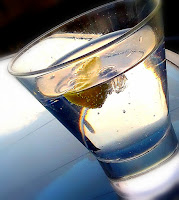
The drinks manufacturer Fever Tree advertises its products with the slogan "If three quarters of your G&T is the tonic, wouldn't you want it to be the best?" I can take issue with the proportions mentioned (If I were served a drink that was 75% tonic, I'd send it back!), but the principal is good. We should be paying as much attention to the quality of our mixer as we do to the gin. I've recently been experimenting with making my own tonic water. There are any number of online recipes, and I've been working my way through them to see which suits me best. All home-made tonics are made as a flavoured syrup, to which soda water is added at the point of serving. At its most basic, this can be a simple syrup of quinine, citric acid and sugar, very similar to the medicinal tonics that were first added to gin in the seventeenth century. Most online suggestions are more complex than that, using citrus peels, juices, herbs and/or spices to create a more layered exp...

Eggs and more eggs!

Image
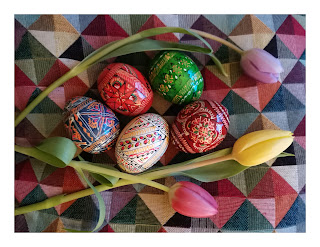
You can't escape eggs at the moment. Whether you're reading about the shortages brought on by this winter's outbreak of avian flu or have hens of your own to worry about, those eggs will be on your mind, and the chocolate ones have been in the shops at least a month already! Eggs feature in spring folk customs right across the northern hemisphere. It is commonly told that our Easter eggs have their origins in German and Norse paganism, but that is to ignore their importance in the Jewish Passover ritual and the presence of painted and gilded eggs as symbols of death and rebirth in many parts of ancient Asia and Africa. As a specifically Christian symbol, the tradition of painting and exchanging eggs appears to have been adopted first by early Christians in Mesopotamia. From there, the custom spread through the Orthodox churches and had become common in the western Church some time before the seventeenth century. The first edition of the Roman Ritual, from 1610 includes pray...

Giving it up for Lent

Image
I am one of those people who like to keep Lent. Not just a bit of dieting disguised as piety, but making a serious attempt to address imbalances in my life, my attitude to others and my spiritual relationships. Usually, this involves trying to reign in instincts I have realised I indulge, or pushing harder against my habitual torpor. It might outwardly look like "giving something up," but it has a higher purpose and deeper meaning for me. This year, having become concerned about my relationship to alcohol, I have decided to lay off drinking for the six weeks of Lent. As well as giving my liver time to rest and renew, it will - I hope - allow me to develop a more disciplined approach to my use of alcohol and find strategies to support that discipline. A few weeks ago, I was introduced to Janet Hadley, a sober coach. The purpose of our meeting was professional - she was due to come on my radio show and we were meeting for an introductory chat. During the conversation, I became ...

Curing and smoking - a trip into the past

Image
Several years ago, a good friend alerted me to an interesting way to prepare ox tongue. He pointed me to a reference in Laura Mason & Catherine Brown's The Taste of Britain to Suffolk cured tongue. A Suffolk cure involves 'pickling' the meat in a brine made from salt, black treacle and stout. Although the passage describes this as a way to cure, cook and press tongue, the authors state that there is a smoked version in an Elizabeth David book. Now that really did interest me! Unfortunately, this was before the days of extensive internet information, and Mrs David's recipes are never detailed or precise. Indeed, when I eventually did acquire a copy of the relevant book ( Spices, Salt and Aromatics in the English Kitchen ), what I found was less a recipe than a jigsaw of hints to inspire someone who already knows what they're doing. Fast-forward fifteen or more years to the present: I am a much more experienced cook, practised at basic curing, and with a much exp...

Wine and Food Pairing

Image
Millions of words have been written on the subject of wine & food matching. Do we really need a thousand more from me? Just as everyone has their own taste and preferences, so each author has their own perspective and insights. What I write is the fruit of over 35 years of serving food with wine and trying to pair them in such a way that both are experienced at their best. I learn something every time I open a bottle, every time I read another writer’s opinions, every time I go to dinner at a friend’s house. As we approach the season of festive soirées and celebration dinners, I hope my words offer something you haven’t thought yet; perhaps a few simple pointers if you are new to this style of entertaining, perhaps an unusual recommendation if you’re feeling a bit jaded with it all. First things first: there are no rules. None. Forget “red wine with meat, white with fish.” Forget “driest first, sweetest last.” These are but advice. What matters is what delights the diner. If that...

Autumn Game

Image
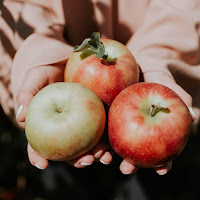
As the year turns colder, nature compensates by giving up all her best gifts: apples, quinces and walnuts in the orchard, hedgerows heavy with elderberries and sloes, and wonderfully earthy mushrooms in the woods and fields. The breeding season for wild animals has passed, and hunting is permitted once more. I love to cook with game, and autumn is my favourite time of year for entertaining. The slightly ferric tang of game meat works well with earthy root vegetables, ripe fruit and musky wild mushrooms. Fatty goose and duck can be off-set with apples, damsons or a splash of sloe gin. Use those apples, too, with pheasant, but give it a splash of cream to smooth out its leanness. Fine-tasting, small birds like grouse, partridge and woodcock are best cooked quickly and simply, counting one bird per person. Before you roast, slip a quarter of fresh quince inside the cavity, for a touch of its honey-and-saffron fragrance in the meat. Venison meat is similar in texture to lean beef, but with...