Posts

Tonic to my Gin

Image
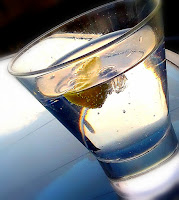
The drinks manufacturer Fever Tree advertises its products with the slogan "If three quarters of your G&T is the tonic, wouldn't you want it to be the best?" I can take issue with the proportions mentioned (If I were served a drink that was 75% tonic, I'd send it back!), but the principal is good. We should be paying as much attention to the quality of our mixer as we do to the gin. I've recently been experimenting with making my own tonic water. There are any number of online recipes, and I've been working my way through them to see which suits me best. All home-made tonics are made as a flavoured syrup, to which soda water is added at the point of serving. At its most basic, this can be a simple syrup of quinine, citric acid and sugar, very similar to the medicinal tonics that were first added to gin in the seventeenth century. Most online suggestions are more complex than that, using citrus peels, juices, herbs and/or spices to create a more layered exp...
Eggs and more eggs!

Image
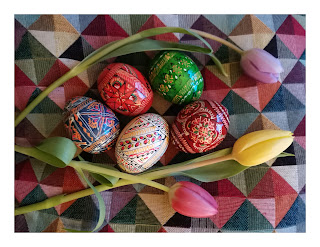
You can't escape eggs at the moment. Whether you're reading about the shortages brought on by this winter's outbreak of avian flu or have hens of your own to worry about, those eggs will be on your mind, and the chocolate ones have been in the shops at least a month already! Eggs feature in spring folk customs right across the northern hemisphere. It is commonly told that our Easter eggs have their origins in German and Norse paganism, but that is to ignore their importance in the Jewish Passover ritual and the presence of painted and gilded eggs as symbols of death and rebirth in many parts of ancient Asia and Africa. As a specifically Christian symbol, the tradition of painting and exchanging eggs appears to have been adopted first by early Christians in Mesopotamia. From there, the custom spread through the Orthodox churches and had become common in the western Church some time before the seventeenth century. The first edition of the Roman Ritual, from 1610 includes pray...

Giving it up for Lent

Image
I am one of those people who like to keep Lent. Not just a bit of dieting disguised as piety, but making a serious attempt to address imbalances in my life, my attitude to others and my spiritual relationships. Usually, this involves trying to reign in instincts I have realised I indulge, or pushing harder against my habitual torpor. It might outwardly look like "giving something up," but it has a higher purpose and deeper meaning for me. This year, having become concerned about my relationship to alcohol, I have decided to lay off drinking for the six weeks of Lent. As well as giving my liver time to rest and renew, it will - I hope - allow me to develop a more disciplined approach to my use of alcohol and find strategies to support that discipline. A few weeks ago, I was introduced to Janet Hadley, a sober coach. The purpose of our meeting was professional - she was due to come on my radio show and we were meeting for an introductory chat. During the conversation, I became ...

Curing and smoking - a trip into the past

Image
Several years ago, a good friend alerted me to an interesting way to prepare ox tongue. He pointed me to a reference in Laura Mason & Catherine Brown's The Taste of Britain to Suffolk cured tongue. A Suffolk cure involves 'pickling' the meat in a brine made from salt, black treacle and stout. Although the passage describes this as a way to cure, cook and press tongue, the authors state that there is a smoked version in an Elizabeth David book. Now that really did interest me! Unfortunately, this was before the days of extensive internet information, and Mrs David's recipes are never detailed or precise. Indeed, when I eventually did acquire a copy of the relevant book ( Spices, Salt and Aromatics in the English Kitchen ), what I found was less a recipe than a jigsaw of hints to inspire someone who already knows what they're doing. Fast-forward fifteen or more years to the present: I am a much more experienced cook, practised at basic curing, and with a much exp...

Wine and Food Pairing

Image
Millions of words have been written on the subject of wine & food matching. Do we really need a thousand more from me? Just as everyone has their own taste and preferences, so each author has their own perspective and insights. What I write is the fruit of over 35 years of serving food with wine and trying to pair them in such a way that both are experienced at their best. I learn something every time I open a bottle, every time I read another writer’s opinions, every time I go to dinner at a friend’s house. As we approach the season of festive soirées and celebration dinners, I hope my words offer something you haven’t thought yet; perhaps a few simple pointers if you are new to this style of entertaining, perhaps an unusual recommendation if you’re feeling a bit jaded with it all. First things first: there are no rules. None. Forget “red wine with meat, white with fish.” Forget “driest first, sweetest last.” These are but advice. What matters is what delights the diner. If that...

Autumn Game

Image
As the year turns colder, nature compensates by giving up all her best gifts: apples, quinces and walnuts in the orchard, hedgerows heavy with elderberries and sloes, and wonderfully earthy mushrooms in the woods and fields. The breeding season for wild animals has passed, and hunting is permitted once more. I love to cook with game, and autumn is my favourite time of year for entertaining. The slightly ferric tang of game meat works well with earthy root vegetables, ripe fruit and musky wild mushrooms. Fatty goose and duck can be off-set with apples, damsons or a splash of sloe gin. Use those apples, too, with pheasant, but give it a splash of cream to smooth out its leanness. Fine-tasting, small birds like grouse, partridge and woodcock are best cooked quickly and simply, counting one bird per person. Before you roast, slip a quarter of fresh quince inside the cavity, for a touch of its honey-and-saffron fragrance in the meat. Venison meat is similar in texture to lean beef, but with...

Once upon a Time... (Apologia pro curriculo meo)

Image
I'm often asked how I got into hospitality as a profession. The truth is it's only been my main source of income for just under two years. Before that, I was just an experienced amateur. Now, I freelance as a features writer, cocktail tutor, consultant/trainer to the industry and sommelier at a highly-respected establishment in North Yorkshire. Not a bad trajectory for someone who was a gibbering wreck under the table a few years ago, eh? Let's revisit a significant phrase from that second sentence: "...only been my main source of income..." Nobody's skills and knowledge are limited to their field of employment, and I have been cooking, hosting, drinking and even teaching all my adult life. My journey to my current, happy career has taken longer than many people's, but I can trace a clear path that has led me here. Just as a canal has its towpath, so my former career in social care has a parallel path that I have walked in hospitality. Regular or longstand...